Tree removal in Shadwell
If you are looking for tree removal in Shadwell, you probably want a service that is safe, efficient, and considerate of the local area. Whether a tree has become too large for its space, is leaning after recent weather, is damaged by disease, or is creating problems for a home, garden, or business premises, the right team can remove it with minimal disruption.
Shadwell has a mix of residential streets, apartment blocks, converted buildings, commercial yards, and tightly arranged properties, which means tree work often needs careful planning. Access can be limited, parking can be awkward, and neighbouring properties may be close by. That is why local knowledge matters. A well-organised tree removal service in Shadwell should understand how to work safely in tighter urban spaces while protecting surrounding structures, fences, pavements, and underground features.
From small ornamental trees in private gardens to larger mature trees close to buildings, tree felling and removal needs the right equipment, methods, and preparation. Our aim is to help local customers make a confident decision by explaining what the service includes, when removal is the right option, how the work is carried out, and what to consider before booking.
Why tree removal may be needed in Shadwell

Tree removal is never the first choice in every situation, but there are many practical reasons why it becomes the safest or most sensible option. In a busy East London area like Shadwell, trees can quickly become a concern when they begin affecting access, light, safety, or neighbouring properties. A tree that looked manageable a few years ago may now be too large for its location or may have developed structural problems that make it unsafe to keep in place.
Some trees are removed because they are dead, dying, or severely diseased. Others may be damaged by storms, strong winds, soil movement, or vehicle impact. In dense residential streets and around commercial sites, a tree with weak limbs or a compromised trunk can become a risk to people, vehicles, roofs, and walls. In these cases, professional removal is often the most responsible solution.
There are also practical reasons. Roots can lift paving, interfere with drainage, or affect small gardens where space is already limited. In properties with courtyards, terraces, or shared boundaries, a tree may block light into windows or limit the use of outdoor areas. Removing the tree can improve usability and reduce future maintenance concerns.
Common situations that lead to removal
Tree removal in Shadwell is often requested for one of the following reasons:
- A tree is dead, dying, or clearly declining.
- Branches are dropping or showing signs of failure.
- The tree is growing too close to a building or boundary.
- Roots are causing paving or surface damage.
- A tree is leaning after wind or storm damage.
- There is concern about the tree’s stability or future safety.
- A site is being redeveloped, refurbished, or reconfigured.
What our tree removal service includes

A proper tree removal service should be planned from the outset. It is not just about cutting a tree down. It involves assessing the site, choosing the safest approach, protecting nearby areas, and removing the tree in a controlled way. In Shadwell, where access conditions can vary from one property to the next, a tailored approach is especially important.
Every job should begin with a site assessment. This helps determine the best method for dismantling the tree, whether that means working from the ground, using climbing techniques, or sectionally reducing the tree from the top down. The team should also look at the surroundings, such as fences, sheds, parked vehicles, communal access points, overhead lines, and neighbouring roofs.
Once the tree has been removed, the site is usually cleared of branches, timber, and debris. Depending on the arrangement, the stump may also be dealt with separately. Some customers want the wood removed completely, while others prefer to keep logs for firewood or want the material chipped for garden use. A good service should be flexible enough to match the property owner’s needs.
Typical elements included in the service
Depending on the tree and the site, the service may include:
- Initial assessment and planning
- Controlled dismantling or felling
- Use of ropes, rigging, or climbing methods where needed
- Protection of nearby surfaces and property features
- Branch and trunk removal
- Green waste clearance
- Optional stump removal or grinding
- Advice on replacement planting or aftercare
Important: the exact method depends on the size of the tree, access to the site, and the surrounding environment. This is why a local visit or detailed discussion is often the best way to plan the work properly.
Tree removal for homes, landlords, and businesses

Shadwell includes a wide range of property types, and each one brings its own needs. Homeowners may be dealing with a tree in a small front garden, a rear courtyard, or a shared boundary close to neighbouring homes. Landlords may need to deal with a tree that has become problematic between tenancies or is affecting access for tenants. Commercial customers may need a tree removed from a car park, service yard, retail frontage, or managed premises.
For residential customers, tree removal is often about making the garden usable again and reducing worry about safety. For landlords and managing agents, it can be about keeping communal areas tidy, reducing complaints, and preventing damage to shared spaces. For businesses, appearance and access can matter just as much as safety, especially where customers, staff, deliveries, or vehicles must move in and out regularly.
Because the area is a mix of older buildings, newer developments, and compact plots, tree removal in Shadwell often needs a thoughtful approach. A local team that understands typical access patterns, parking pressures, and shared boundary issues is more likely to complete the work smoothly and with less disruption to surrounding properties.
Examples of local property types we regularly consider
- Terraced houses with rear gardens
- Apartment blocks with limited communal access
- Converted buildings and period properties
- Small commercial premises
- Managed estates and shared courtyards
- Development sites and refurbished plots
If you are unsure whether a tree should be removed or pruned instead, a site assessment can help you choose the most practical option.
How tree removal works on site

Many customers want to know what happens on the day. The process should be clear, organised, and focused on safety from start to finish. In a built-up location like Shadwell, where narrow access and close neighbours are common, careful sequencing makes a big difference to how smoothly the job runs.
The team will usually arrive with the right tools and equipment for the tree and the site conditions. That might include climbing kit, lowering ropes, saws, protective gear, and clearance equipment. If the tree can be felled safely in one piece, that may be the quickest option. However, in many urban settings, sectional dismantling is safer and more appropriate because it reduces the risk to nearby buildings and structures.
Branches are typically removed first, then the main trunk is cut down in controlled sections. Where necessary, pieces are lowered carefully rather than dropped. This is particularly important near garden rooms, conservatories, fences, paving, and parked vehicles. Once the timber is down, it is cut into manageable sections, loaded, and taken away unless you have asked to keep some of it.
Safety and control are the priority
Tree removal should never be rushed. A professional approach means checking the weather, confirming the work area, keeping people away from the zone, and making sure tools and equipment are used correctly. Good communication on site also helps, especially where the property is shared or access must remain available for neighbours, tenants, or deliveries.
In busy streets and compact outdoor spaces, controlled dismantling is often the safest and most practical solution.
Stump removal and aftercare options
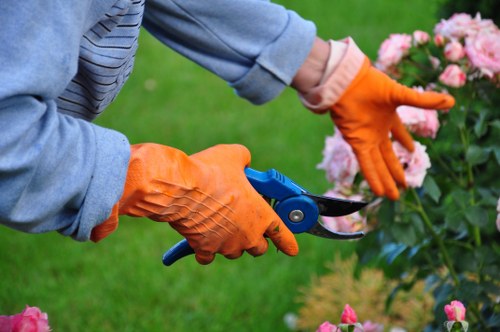
Once a tree is removed, many customers ask what happens next. In some cases, the stump can be left in place if it is not causing a problem. In other situations, stump removal or stump grinding is recommended to free up the space, reduce trip hazards, and prevent regrowth. The right choice depends on how you want to use the area afterwards.
If the stump is left, it may gradually decay over time, but it can still be an obstacle in a garden or access route. Stump grinding is often a good option where you want to replant, lay turf, add paving, or simply create a cleaner finish. It can also be useful where a stump is close to a boundary or where regrowth would be inconvenient.
Aftercare may include advice on the next steps for the space, such as replanting with a better-suited species, improving soil conditions, or allowing time before new landscaping begins. In a compact outdoor area, planning the next phase matters just as much as removing the tree itself.
Popular aftercare choices
- Stump grinding to below ground level
- Leaving the stump temporarily for later works
- Clearing the area for turf or planting
- Preparing the ground for landscaping or paving
- Keeping selected timber for logs or garden use
Preparing for your tree removal appointment
A little preparation helps the work go more smoothly and can reduce delays on the day. If you are arranging tree removal in Shadwell, it is useful to think about access, parking, and whether any shared areas need to be kept clear. This is especially important where the property is on a narrow street, near communal entrances, or in a location with limited loading space.
Before the team arrives, it can help to move vehicles if they are close to the work area, secure pets, and let neighbours or building managers know if access might be affected. If the tree is in a private garden, check whether any ornaments, furniture, hanging baskets, or fragile items need to be moved out of the way. If the work is in a commercial setting, make sure staff know which areas need to stay clear.
Where a tree is near a fence, wall, greenhouse, shed, or external storage area, it is worth flagging this in advance. The more the team knows about the layout, the better they can plan the safest method. Even simple details, such as a locked gate, basement access, or a narrow side passage, can affect the approach.
Preparation checklist
- Clear vehicles from the immediate work area if possible
- Remove garden furniture, toys, and loose items
- Keep pets and children away from the site during the work
- Let neighbours know if branches or debris may pass close to shared boundaries
- Provide access details for gates, courtyards, or shared entrances
- Tell the team about underground features, cables, or hidden obstructions if known
Good preparation saves time and helps the work stay safe and efficient.
What affects the price of tree removal?
Every tree removal project is different, so the cost depends on a range of practical factors rather than a single fixed rule. Customers in Shadwell often want to understand what influences pricing before they request a quote. This is sensible, especially where access is tight or the tree sits close to a building or shared boundary.
The size of the tree is one of the biggest factors. A small tree in an open garden is usually much quicker to remove than a large mature tree that needs careful section-by-section dismantling. Access is another key point. If equipment can reach the site easily, the job may be more straightforward than a tree tucked behind a building, in a courtyard, or within a restricted communal area.
Other factors include the condition of the tree, whether there are safety concerns, the amount of waste to remove, stump work, and whether traffic or pedestrian management is needed. The presence of nearby structures, narrow paths, overhead obstacles, or parking restrictions can also affect how the work is carried out.
Common factors that influence a quote
- Tree size and height
- Tree condition and structural stability
- Site access and available working space
- Amount of debris and waste removal required
- Need for stump grinding or follow-up work
- Proximity to buildings, fences, and utilities
- Any additional care needed for neighbours or shared areas
Because of these variables, the most reliable way to understand cost is to request a site-specific quote. That gives you a clearer picture of what is involved and helps avoid surprises later.
Why choose a local tree removal company in Shadwell?
Choosing a local company is often the easiest way to get the right result. A team familiar with Shadwell and nearby parts of East London is more likely to understand the everyday challenges that come with inner-city tree work. That includes restricted access, permit-sensitive parking, busy streets, shared courtyards, and properties where the tree is very close to homes or business entrances.
Local experience also helps with planning. When a contractor knows how tree work usually needs to be handled in the area, they can anticipate the need for careful loading, considerate scheduling, and the right equipment for the type of property. That can make the whole experience less stressful for the customer.
For many local customers, the benefit of a nearby team is responsiveness. If a storm has damaged a tree, or if a tree has suddenly become unsafe, a local service may be better placed to assess the situation promptly and advise on the next steps. For planned removals, local knowledge can still make a big difference in how efficiently the work is completed.
Benefits of a local service
- Better understanding of Shadwell property layouts
- More awareness of parking and access restrictions
- Experience working around neighbours and shared spaces
- Practical knowledge of urban tree removal methods
- Faster and clearer planning for local customers
Areas covered near Shadwell
Many customers searching for tree removal in Shadwell also have properties or sites nearby. A local tree team can often help across surrounding parts of East London, especially where similar access and property challenges exist. This can be useful for landlords, managing agents, and business owners who need consistent support across several locations.
Nearby areas often include Whitechapel, Wapping, Stepney, Limehouse, Aldgate, Bethnal Green, and parts of Tower Hamlets and the surrounding districts. Each area has its own mix of building styles and outdoor spaces, from compact gardens to larger managed plots and commercial yards.
If your property sits near the boundary of Shadwell and one of these neighbouring areas, it is still worth enquiring. The right team can usually advise whether the work can be handled in a similar way and what considerations may apply based on access and the type of tree.
We can help with tree removal for
- Private homes and flats
- Landlords and letting properties
- Managing agents and block managers
- Retail and hospitality premises
- Warehouses, yards, and light commercial sites
- Community and shared spaces
When tree removal may be better than pruning
It is common for property owners to hope a tree can simply be trimmed rather than removed. In some cases that is true. Pruning can reduce size, improve shape, and help manage overgrowth. However, there are situations where pruning will only delay the underlying issue. If the tree is unstable, severely diseased, badly positioned, or already causing structural damage, removal may be the better long-term answer.
One of the advantages of getting a professional opinion is that you can weigh the options properly. Some trees in Shadwell are on small plots where even regular pruning will not solve the problem of limited space. Others may be growing too close to a wall or building, where future maintenance would remain difficult even after a reduction in height or spread.
The best approach is the one that keeps people safe and suits the property in the long run. If there is a chance the tree could be preserved with pruning, that can be discussed. If removal is the clearer solution, it is better to deal with the issue now than to wait for a more serious problem later.
Signs removal may be the right option
- Persistent decay or major structural weakness
- Repeated storm damage
- Severe root-related damage to paving or foundations
- Overcrowding in a very limited space
- Ongoing safety concerns near buildings or public areas
What to expect when you request a quote
When you contact a tree removal company, you should expect a clear conversation about the tree, the site, and the work you want done. In many cases, a short discussion can help determine whether a visit is needed and what information is required for an accurate quote. Photos can be useful, especially if the tree is in a hard-to-access area, but a site assessment is often the best way to confirm the approach.
A good quote should make it clear what is included, such as felling or dismantling, waste removal, stump options, and any extra considerations for the site. It should also reflect the specific circumstances of your property rather than using a one-size-fits-all approach. That matters in Shadwell, where two neighbouring properties can present completely different access challenges.
If you are comparing services, look for clarity, sensible planning, and a practical attitude toward your property. The right team will explain what they recommend and why, without overcomplicating the process.
Questions you may want to ask
- How will the tree be removed safely from this site?
- Will the work require sectional dismantling?
- Is stump grinding available if needed?
- How will waste be cleared away?
- Do you need access instructions or parking details in advance?
- Can you work around shared entrances or neighbouring properties?
Contact us today to request a free quote and discuss the best way to handle your tree removal in Shadwell.
Frequently asked questions
How do I know if a tree needs to be removed?
If a tree is dead, unstable, badly diseased, or causing damage to nearby structures, removal may be the safest option. A site assessment can help confirm whether pruning or removal is more appropriate.
Can you remove a tree in a tight garden or courtyard?
Yes, many tree removal jobs in Shadwell involve limited access. In those cases, controlled dismantling, careful lowering, and good site planning are often used to complete the work safely.
Will the tree be taken away after removal?
In most cases, yes. Tree removal normally includes clearing the branches and timber, though you can sometimes request to keep certain material if that suits your plans.
Do you handle stump removal as well?
Stump grinding or stump removal may be available as an additional service, depending on the site and how you want to use the area afterwards.
How long does the work take?
That depends on the size of the tree, access, and the amount of clearing required. A small tree in an open area may be completed much faster than a larger tree near buildings or in a restricted space.
Can you work near flats or shared entrances?
Yes, provided the area can be managed safely. This is common in Shadwell, where many properties have shared access points or close boundaries.
Should I get permission before removing a tree?
Some trees may be subject to controls or restrictions, so it is wise to check before any work begins. If you are unsure, ask for advice before booking.
Book your tree removal in Shadwell
If you need a reliable team for tree removal in Shadwell, the best next step is to request a quote and talk through your site in detail. Whether the tree is causing a safety issue, taking up valuable space, or simply no longer suited to the property, a local service can help you remove it in a controlled and sensible way.
We understand that customers want the process to be straightforward. That means clear communication, practical planning, and a service that respects your home, business, neighbours, and schedule. From first enquiry through to clearance, the aim is to make the job as smooth as possible.
Book your service now if you are ready to move forward, or request a free quote if you would like to discuss the tree, access, and the best method for removal. If you have a problem tree in Shadwell and want a professional solution, contact us today.